How to Calculate ROI on a Property Investment – Step-by-Step with Examples
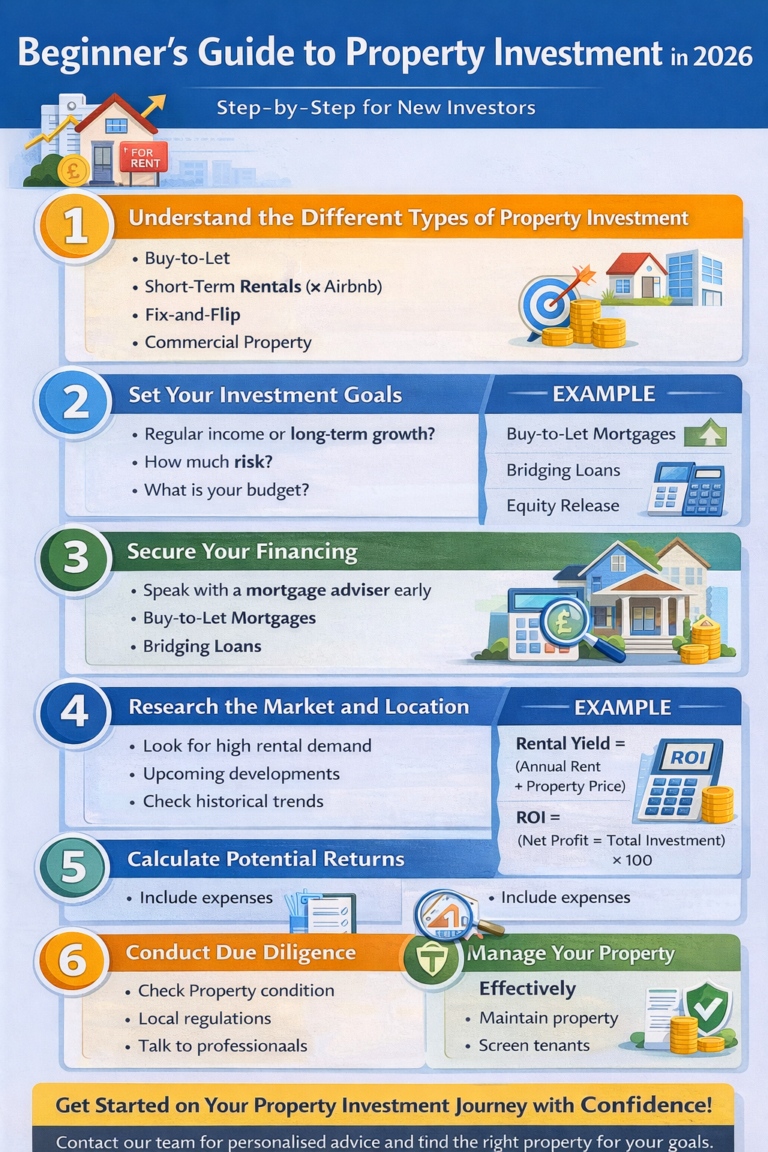
Investing in property can be a highly rewarding way to build wealth, but knowing how much return you’re getting is essential. The key metric most investors use is ROI – Return on Investment. Calculating ROI helps you compare potential investments, understand profitability, and make smarter decisions.
In this guide, we’ll walk through how to calculate ROI on a property investment, step by step, with practical examples.
What Is ROI in Property Investment?
ROI (Return on Investment) measures the profitability of an investment relative to the amount of money you put in.
For property, ROI considers factors like:
- Rental income
- Operating costs (mortgage, maintenance, management fees)
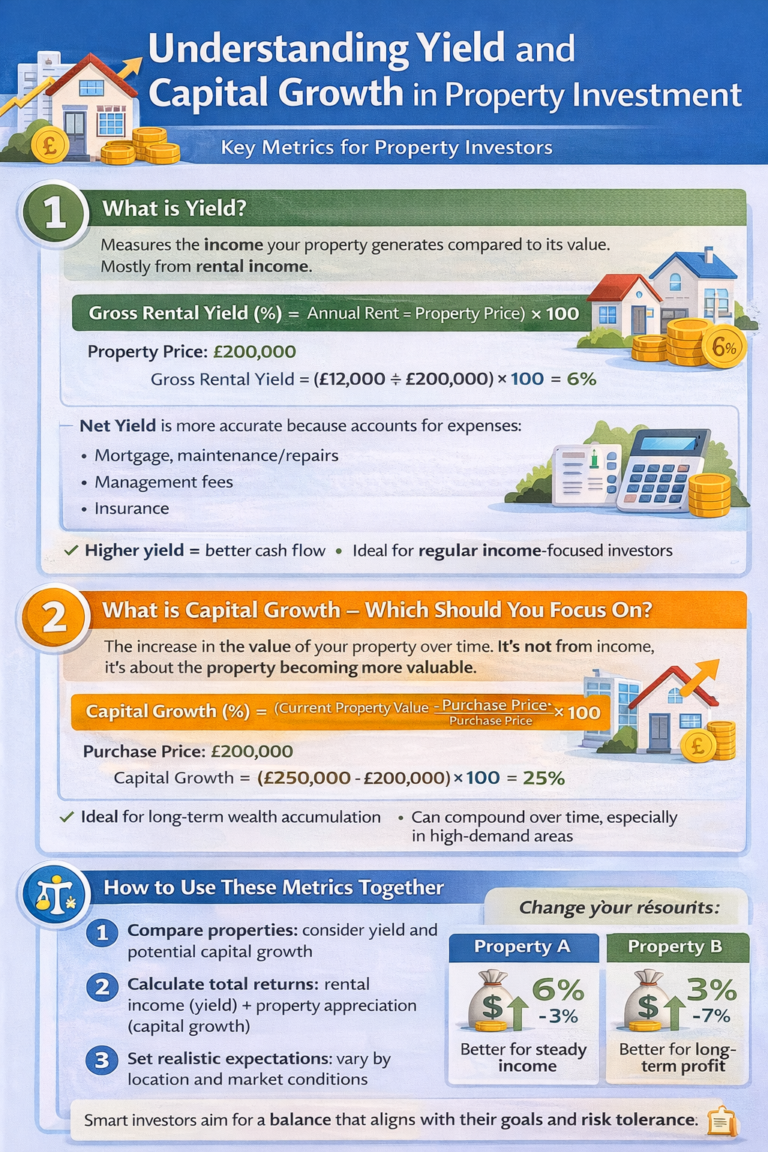
- Capital growth (increase in property value)
A clear understanding of ROI helps you decide whether a property is a good investment or if your money could work harder elsewhere.

Step 1: Calculate Your Total Investment
The first step is to identify how much money you’ve invested in the property. This includes:
- Deposit: The upfront amount you paid
- Purchase costs: Stamp duty, legal fees, survey costs
- Renovation / refurbishment costs: Any money spent improving the property
Example:
- Deposit: £25,000
- Stamp duty & fees: £5,000
- Renovation: £10,000
- Total Investment: £40,000
Step 2: Calculate Your Annual Income
Next, calculate how much income the property generates. For rental properties, this is usually annual rental income minus operating costs like:
- Mortgage payments
- Property management fees
- Insurance
- Repairs and maintenance
- Utilities (if you pay them)
Example:
- Rental income per year: £12,000
- Mortgage payments: £4,800
- Maintenance / insurance: £1,200
- Net Annual Income: £6,000
Step 3: Include Capital Growth (Optional but Important)
If you plan to sell the property later, capital growth—the increase in property value—affects your ROI.
Example:
- Purchase price: £200,000
- Current market value after 3 years: £230,000
- Capital growth: £30,000
Step 4: Calculate ROI
There are a few ways to calculate ROI, but the most common is:
ROI (%) = (Net Profit / Total Investment) × 100
Step 4a: Based on Rental Income Only
- Net Annual Income: £6,000
- Total Investment: £40,000
ROI=(6,000÷40,000)×100=15%
Step 4b: Including Capital Growth
- Net Income: £6,000 × 3 years = £18,000
- Capital growth: £30,000
- Total Profit: £48,000
ROI=(48,000÷40,000)×100=120%over3years( 40%peryear)
This gives a clearer picture of total returns.
Step 5: Compare and Evaluate
Once you know your ROI, you can compare properties, cities, or even other investment types like stocks or bonds.
Tip: Consider both cash-on-cash ROI (rental income vs investment) and total ROI (including capital growth) to get a full picture.
Quick Tips to Maximise ROI
- Choose locations with high rental demand and growth potential
- Minimise operating costs without compromising quality
- Consider long-term capital growth as well as immediate rental yield
- Keep track of all costs to ensure your ROI calculation is accurate
Final Thoughts
Calculating ROI is essential for property investors. It’s not just about the numbers—it’s about understanding the true profitability of your investment. By following these steps and regularly reviewing your properties, you can make informed decisions that grow your wealth over time.
Looking for your next investment property or want help calculating potential ROI? Get in touch with our team for expert advice and personalised investment insights.