Beginner’s Guide to Property Investment in 2026 – Step-by-Step for New Investors
Property investment remains one of the most popular ways to build wealth, but starting out can feel overwhelming—especially in 2026, with a constantly changing market. This guide walks you through property investment basics step by step, so even first-time investors can start confidently.

Step 1: Understand the Different Types of Property Investment
Before you invest, it’s important to know your options. Common types of property investment include:
- Buy-to-Let – Purchasing a property to rent out to tenants for regular income.
- Short-Term Rentals – Renting properties via platforms like Airbnb, often in high-demand areas.
- Fix-and-Flip – Buying a property, renovating it, and selling it for profit.
- Commercial Property – Offices, shops, or industrial units, which often have longer leases.
Each type has different risk, return, and management requirements. Decide which aligns with your goals, resources, and risk tolerance.
Step 2: Set Your Investment Goals
Ask yourself:
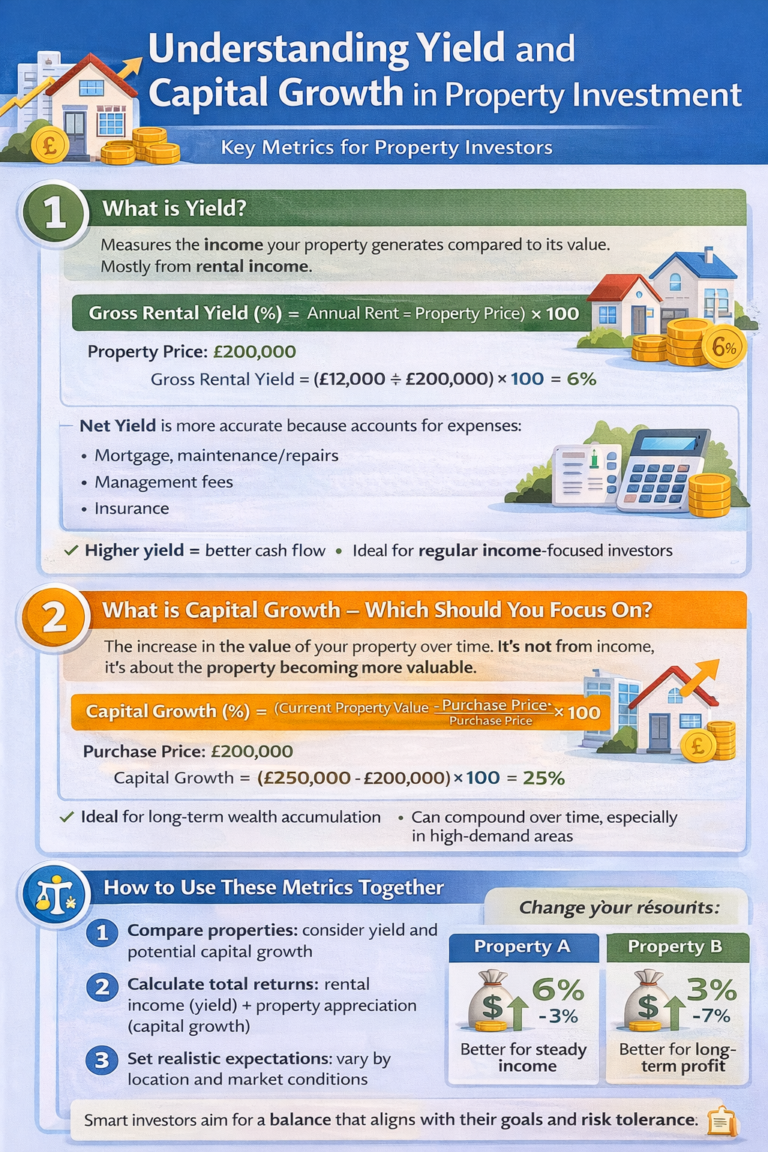
- Am I looking for regular income or long-term capital growth?
- How much risk am I willing to take?
- What is my budget and financing capacity?
Clear goals will guide your investment strategy and help you choose the right property type.
Step 3: Secure Your Financing
Most investors will need a mortgage or other funding to get started. Options include:
- Buy-to-let mortgages – Typically require a larger deposit and stricter affordability checks.
- Bridging loans – Short-term finance, often used for renovations.
- Personal savings or equity release – Can supplement deposits.
Tip: Speak with a mortgage adviser early to understand how much you can borrow and what products suit your plan.
Step 4: Research the Market and Location
Location is crucial in property investment. Consider:
- Areas with high rental demand or planned infrastructure improvements.
- Local amenities, schools, and transport links.
- Historical trends for capital growth and rental yields.
Tools like property portals, investment calculators, and market reports are invaluable.
Step 5: Calculate Potential Returns
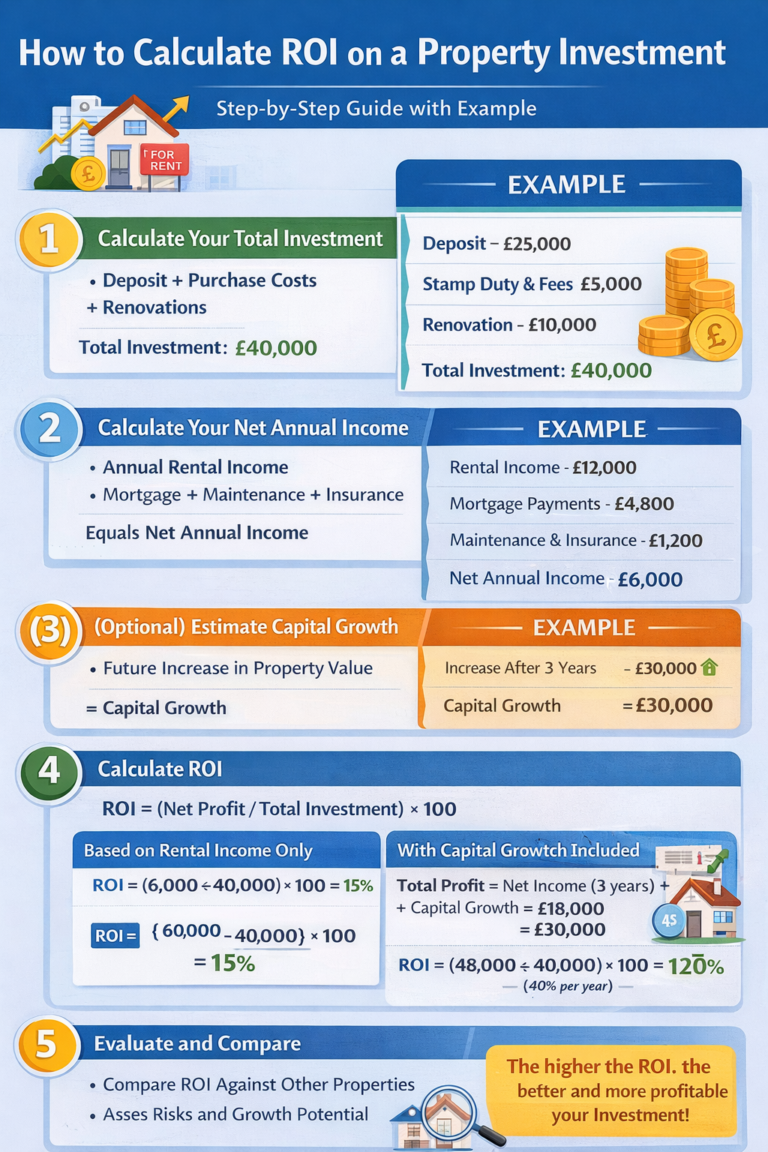
Before buying, calculate expected returns using rental yield and ROI:
- Rental Yield = (Annual Rent ÷ Property Price) × 100
- ROI = (Net Profit ÷ Total Investment) × 100
Factor in expenses like mortgage payments, maintenance, insurance, and management fees.
Step 6: Conduct Due Diligence
Don’t rush. Perform careful checks including:
- Property condition and potential repairs
- Legal status and zoning restrictions
- Tenant demand and local regulations
A professional surveyor or property adviser can help reduce risk.
Step 7: Manage Your Property Effectively
Once purchased, managing your property well maximizes returns:
- Keep up with maintenance and repairs
- Screen tenants carefully
- Consider using a property management service if you prefer a hands-off approach
Good management ensures long-term profitability and protects your investment.
Final Thoughts
Property investment in 2026 offers exciting opportunities, but success comes from planning, research, and disciplined execution. By understanding types of investments, setting goals, calculating returns, and managing properties wisely, even beginners can build a profitable portfolio over time.
Ready to start your property investment journey? Contact our team for personalised advice and guidance on finding the right property for your goals.